
Bitcoin is one of the few markets that provides a public audit trail of all transactions settled on the base layer - but this data is limited in scope and often conflated with interpretive judgments.
When applied correctly, analysis of transactions on-chain avoids conflation of the observed and interpreted while still providing insights based on objectively measurable facts.
What can and cannot be observed directly falls under two categories - observations that relate directly to on-chain transactions and those that are indirectly inferred from them.
What the blockchain directly records
The Bitcoin blockchain directly records the creation and spending of outputs, their value, whether they have been spent, which transactions created them and how long they have existed on-chain. With this, time on-chain, fees, supply flows through the UTXO set, issuance, and other derived metrics are objective facts.
Other properties are not directly observed, but instead consistently calculated from observed properties.
Most notably, price is not directly observed - the value of one bitcoin in dollars is not recorded on the blockchain. The same applies to Realized Cap - although it uses observed supply and assigns value to each bitcoin based on the external market price when it last moved on-chain, the conversion of that value to dollars remains an external input to the calculation.
This is an important distinction, as various price-to-cost ratios and other metrics indirectly related to the value of bitcoin may rely on other inputs that are not consistent or directly observed.
Last moved price is not necessarily purchase price
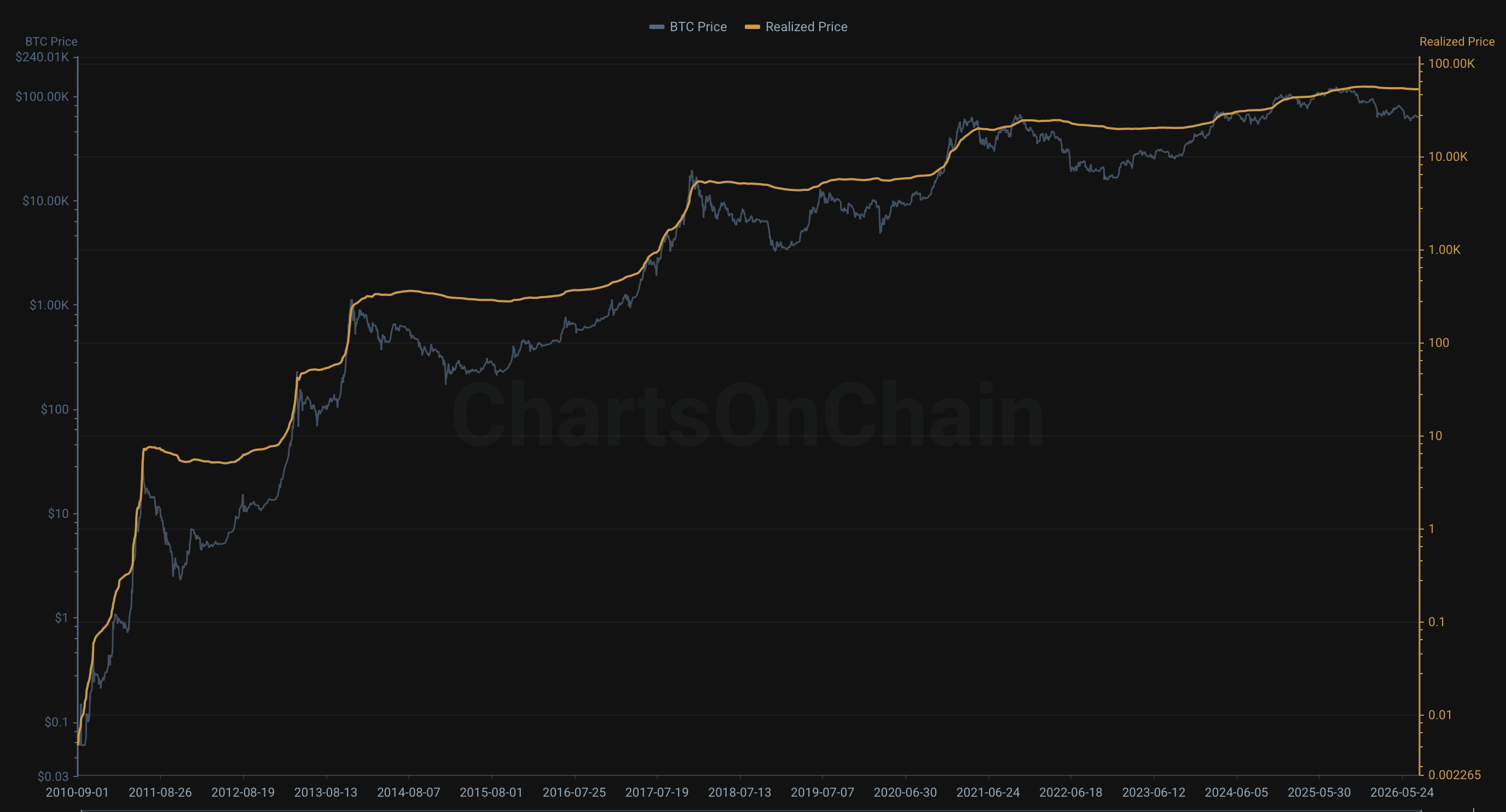
Realized Price, MVRV, NUPL, Supply in Profit/Loss or similar metrics that attempt to analyze aggregate value of bitcoin holdings in relation to their purchase price rely on the value of the last on-chain movement.
At best, this approximates the aggregate on-chain cost basis of coins based on the prices at which they last moved - but rarely reflects the purchase price of any particular bitcoin. The same reasoning that applies to the value of bitcoin also applies to the cost basis of an individual investor.
Similar analysis can help estimate the approximate value of an individual’s aggregate holdings if they consistently move bitcoin on-chain - but rarely provides any insight into their buying behavior.
For example, an individual could move their coins every time they want to change custodians, addresses or wallets, or simply perform internal transfers between their own addresses or between addresses managed by the same entity. Each such transfer of coins would update the estimated cost basis assigned to their holdings, potentially misrepresenting any analysis that attempts to tie value to purchase price.
Meanwhile some factors that influence aggregate supply, value or cost basis are entirely absent from consideration, as they do not appear on-chain. For example, transactions between parties that share the same custodian effectively have no on-chain footprint, as custody of bitcoin is not transferred on-chain. In practice, this means that changes to economic ownership of bitcoin between entities represented by the same custodian wallet are invisible to most if not all of the above-mentioned metrics.
Addresses do not represent people
Wallets and addresses managed by the same entity or individual can be intermingled in complex ways that are difficult to untangle. The same person could possess dozens or hundreds of addresses, particularly when interacting with exchanges. The same wallet can hold multiple addresses, or a transaction can involve multiple addresses, including change returned to the sender. Exchanges typically control thousands of addresses representing deposits from and withdrawals to users; therefore any transaction between exchange addresses can represent movement of funds from one or multiple users at once.
That means that any metric that relies on aggregation across addresses represents an approximation of value or changes affecting aggregated supply.
Metrics that attempt to resolve these approximations rely on additional data to group addresses according to their likely ownership, for example using clustering techniques. They are not wrong, but typically apply to very specific cases, and the validity of their assumptions is often open to debate.
The same reasoning applies to address-balance cohorts - increases in supply at certain levels represent aggregated value at these levels, but whether they reflect entry of new investors is impossible to say with any degree of certainty. It is entirely possible that a large entity is adjusting the distribution of their coins between multiple addresses.
What can be said with on-chain data
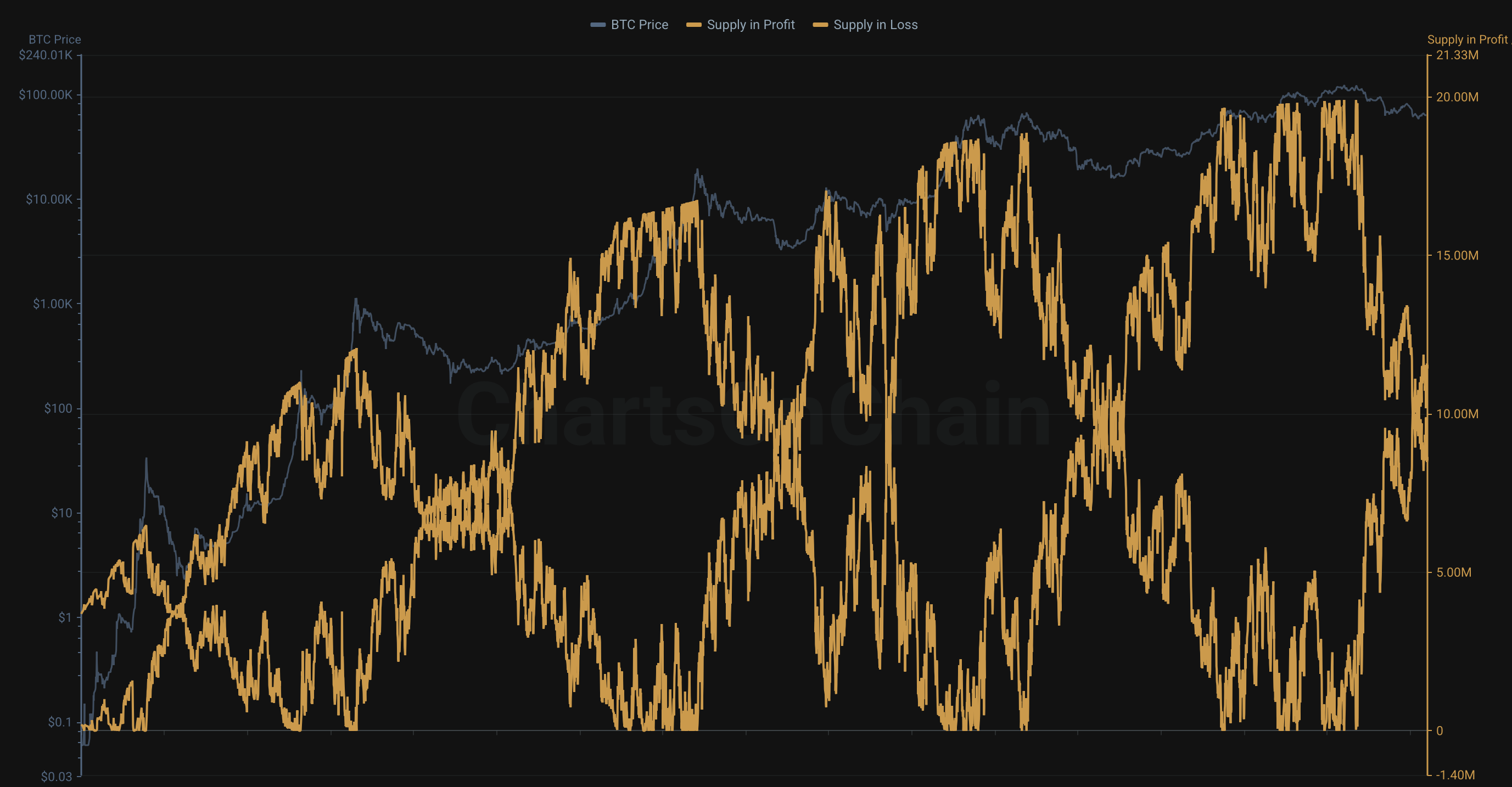
On-chain data is best used to describe observations and aggregated trends about the state or flows of coinage.
It can estimate these aggregates effectively at various levels - for example, the value of supply in certain value buckets, or bitcoin in profit or loss. It can describe how much bitcoin is deposited to or withdrawn from exchanges when addresses are labeled, how much revenue miners accrue in bitcoin or in fiat when external price data is applied, fees, or other properties observed on the base layer.
It can make comparisons within these metrics, for example, how market cap to realized value compares to supply in profit and loss, or demonstrate aggregated changes throughout bitcoin’s life cycle, such as time spent on-chain or value of deposits and withdrawals at certain prices. Taken together, these metrics can form a narrative about the state and trends in the bitcoin market.
What they cannot do is describe what this narrative means - whether it reflects optimism or pessimism, or how it may affect the future price.
What cannot be observed
A substantial part of bitcoin trading and derivatives activity takes place off-chain and provides significant depth beyond exchange trading. Due to its nature, most of this activity is not directly visible on-chain, with few metrics able to describe its properties and state.
Positions, liabilities, liquidations, leveraged exposure, long/short ratios, and options positioning are either invisible or inconsistently estimated.
The same challenge applies to transfers of bitcoin within and between exchange platforms. Unless these transfers follow predictable patterns, or interact consistently with other visible transactions, their contribution to flow, cost-basis, or entity-level metrics is either difficult to identify or significantly distorted.
For example, depositing bitcoin to an exchange wallet says little about whether or when this bitcoin will be sold, as the exchange itself may hold onto it. Similarly for transfers between exchange wallets, or deposits and withdrawals from custodians.
Holder categorization is a convention
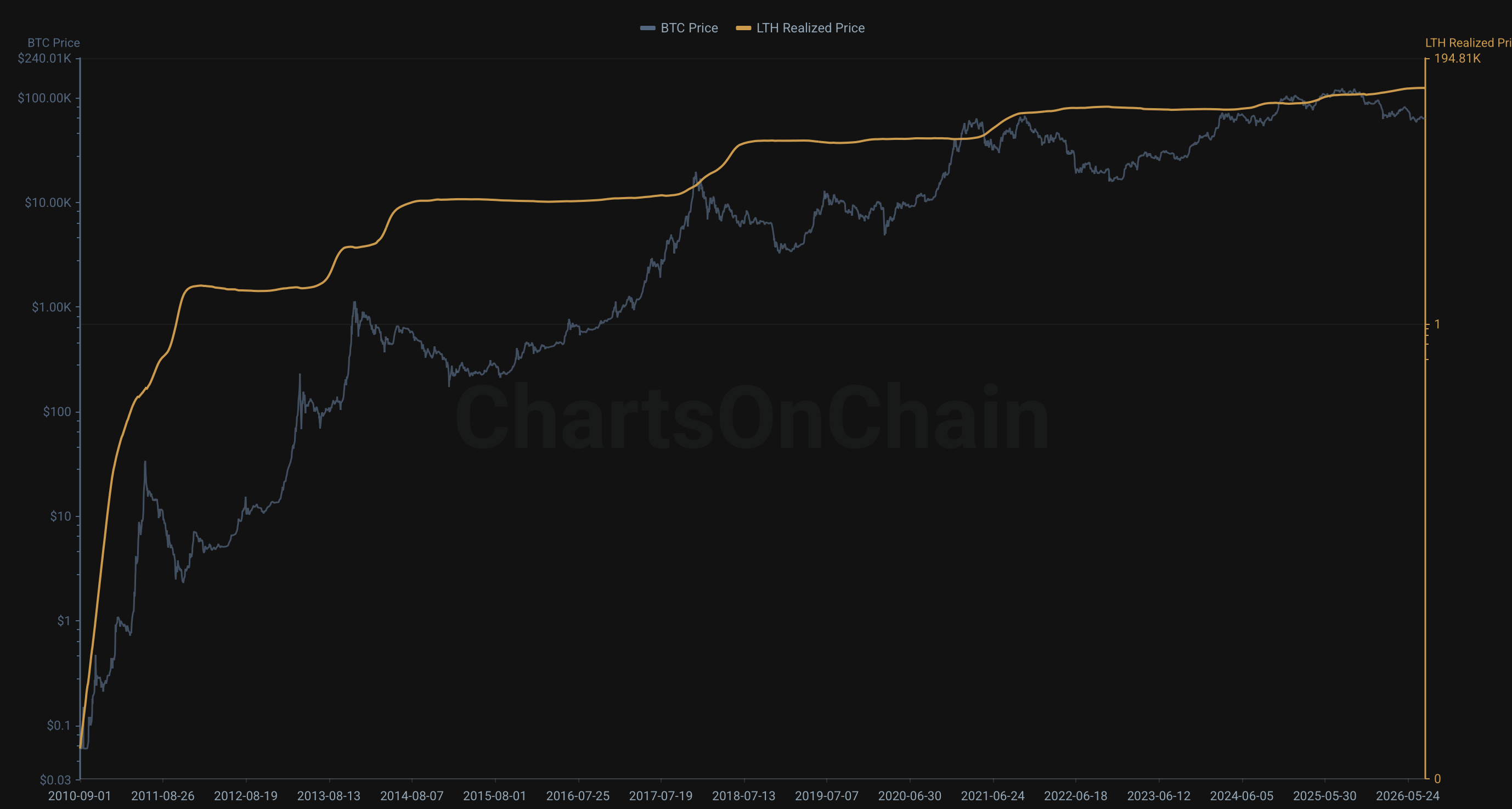
The way supply is separated between short- and long-term holders is entirely conventional but useful, as it highlights how the value of these portions relates to each other, as well as their characteristics in terms of volume, realized value, volume distribution and other metrics. Similar conventions can be applied to other divisions of supply, such as exchange-held versus non-exchange-held, although the latter requires additional assumptions beyond on-chain data to analyze.
The same reasoning applies to divisions between institutional and retail investors, although again, distinguishing between the two relies on external information. Where this approach is counterproductive is in conflating these categories with objective facts that have real-world impact on the bitcoin market.
In practice, the distinction between exchange wallets and non-exchange wallets can be particularly useful, as it reflects an important part of Bitcoin’s economic structure. This division can help indicate whether a change in certain supply or flow metrics reflects movement involving public market infrastructure or merely internal reallocation between entities that share the same custodian.
Bitcoin itself does not differentiate between these, and the division between exchange and personal wallets exists in the minds of analysts. It is useful to consider it when describing observed trends about bitcoin supply, but it rarely applies cleanly to any other division beyond exchange-held and non-exchange-held.
Apply the metric at the level it was calculated
In this light, one of the clearest errors in discussion about bitcoin fundamentals is conflating objective and subjective observations. “Supply in loss is increasing,” is an objective observation if the terms are defined correctly. “Investors are capitulating,” is a subjective interpretation that conflates objective observations with human intent. “The bottom is in,” is a suggestion about the future that may or may not follow these observations and should be tempered with care at all times.
These are not mutually exclusive, but fall under different categories - observations that describe facts, regardless of intent, and suggestions that describe potential outcomes based on these facts. The two are routinely conflated in public commentary, but should be treated separately. Observations are useful as supporting context for interpretations and suggestions, but should not be confused with either.